Seeking urban inclusion of marginalised communities in rapidly developing cities
19 February 2025
STATEMENT BY DEPUTY MAYOR EDDIE ANDREWS AT THE WORLD ECONOMIC FORUM YOUNG LEADERS ROUNDTABLE
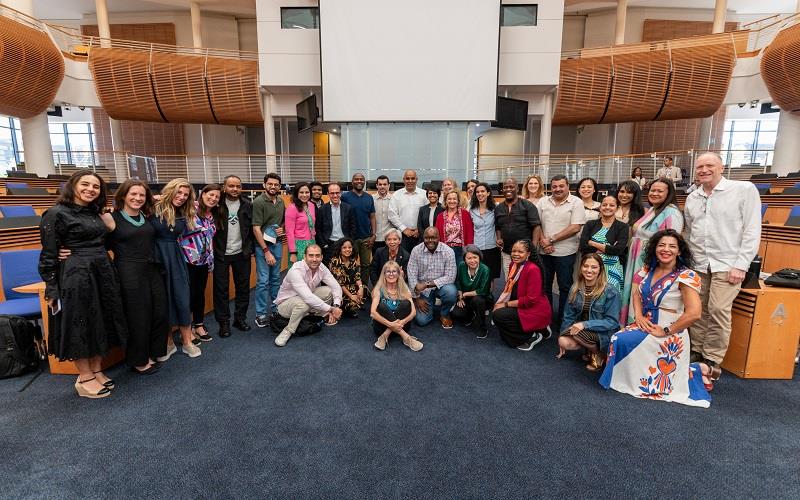
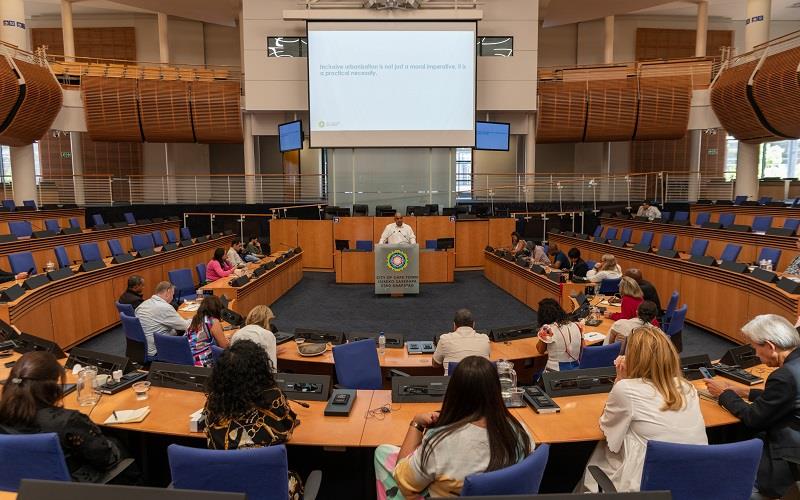
Below is an excerpt of the speech Alderman Eddie Andrews delivered at the World Economic Forum Young Leaders Roundtable that was hosted at the Council Chambers earlier today.
Urbanisation is a defining phenomenon of the 21st century. By 2050 an estimated 70% of the world’s population will live in cities (United Nations, 2018).
We see this same trend in Cape Town; more people are relocating to our beautiful city – in fact, 64% of the people living in our province reside in Cape Town.
Simply stated, our population is massively expanding and we need to prepare.
While urbanisation presents opportunities for economic growth, innovation, and cultural exchange, it also poses significant challenges, particularly in the Global South.
Unlike the Global North, where urbanisation occurred gradually over centuries and they were able to keep up with the necessary investments, cities in the Global South are experiencing rapid and often unplanned urban growth.
This has led to the proliferation of informal settlements, inadequate infrastructure, and deepening inequalities, which have been exacerbated by our past.
The spatial segregation enforced by apartheid planning has left a lasting imprint on our cities, with under-resourced communities – often located on the peripheries – facing systemic exclusion from economic opportunities, public services, and urban amenities.
Cape Town, as one of South Africa’s most economically dynamic cities, is no exception, but we are doing something about it.
Inclusive urbanisation is not just a moral imperative, it is a practical necessity.
Cities that fail to address inequality and exclusion risk social unrest, economic stagnation, and environmental degradation. Inclusive urbanisation, by contrast, fosters social cohesion, economic resilience, and sustainable development. It ensures that all residents, regardless of their socioeconomic status, can access housing, services, and opportunities.
I want to explore what it means to build a spatially inclusive city and will focus on some key points: the provision of affordable land and housing, the creation and maintenance of public spaces, the delivery of public services and infrastructure, and ensuring connectivity and accessibility.
Provision of Affordable Land and Housing in Strategic Locations
The provision of affordable land and housing is the cornerstone of inclusive urbanisation.
In Cape Town, the legacy of apartheid spatial planning has resulted in the concentration of low-income households in peripheral areas, far from economic opportunities and essential services.
This spatial mismatch perpetuates cycles of poverty and exclusion, as residents face long and costly commutes to access jobs, education, and healthcare.
The solution is not as simple as building formal housing in these areas. Of course, that is major step. But it is also about ensuring connectivity to the economic centres of the city, ensuring existing areas have the proper investment needed to also bring economic opportunities to them. This is how we create sustained inclusive urbanisation.
Ensuring connectivity and mobility
Connectivity is the backbone of an inclusive city. Without reliable and affordable transportation, residents of under-resourced communities are cut off from economic opportunities and essential services.
Lower income communities spend up to 43% of their monthly household income on transport, and they spend a significant amount of time in traffic.
The City is investing over R6 billion over the three year medium-term on the roll-out of the MyCiTi bus service to connect Mitchells Plain and Khayelitsha with Wynberg and Claremont. The metro-south east MyCiTi expansion is the biggest financial investment in public transport by any metro to date.
We are also pushing very hard to get passenger rail devolved to us. Passenger rail is the most efficient and affordable mode of public transport and should be the backbone of mobility in Cape Town.
Public Services and Infrastructure
Simple access to basic services such as water, sanitation, electricity, and healthcare is a fundamental right. We cannot build an inclusive Cape Town without this.
Infrastructure gaps also hinder economic development. Unreliable water supply and poor sanitation deter investment, limits productivity, and exacerbate service delivery backlogs.
A lack of proper drainage and waste management contributes to environmental degradation, increasing flood risks and contaminating water sources and urban pollution.
To foster inclusive urbanisation, we are prioritising infrastructure investment and effective governance.
Provision and Maintenance of Public Spaces
Finally, public spaces are essential for fostering social cohesion, promoting physical and mental well-being, and enabling cultural expression, especially in our under resourced areas.
Not only do these spaces offer a site for recreation, they also offer many of the youth in these areas spaces, which represent a lot more than just open spaces. They are spaces of sport, of gathering and of recreation. They represent a place to escape from often difficult situations at home.
They are of moral importance for our communities.
Yet, in many under-resourced communities, public spaces are either absent or in a state of disrepair. We must prioritise the creation and maintenance of public spaces in townships and informal settlements. This includes not only parks and playgrounds, but also streets and pedestrian pathways that are safe, well lit, and accessible to people of all ages and abilities.
As the Mayoral Committee Member for Spatial Planning and Environment, I am amazed to see the recreational opportunities we offer – from our vleis, to our beaches and parks, and we are working each day to link more communities to these areas. In fact, only two days ago, we opened a new path linking Pelican Park to Zeekovlei, one of our most popular recreational spots.
In conclusion, the challenges we face are immense as we strive toward inclusive urbanisation, but they are not insurmountable.
By prioritising affordable housing, maintaining public spaces, delivering essential services, ensuring connectivity, and leveraging information systems, we can build a Cape Town that is inclusive, resilient, and prosperous for all.
Caption: Deputy Mayor Eddie Andrews addressed the World Economic Forum Young Leaders Roundtable earlier today. Alderman Andrews focused on the challenges of rapid urbanisation and how the City are addressing these.
End
Published by:
City of Cape Town, Media Office